Drug Tariff Basics
The NHS Drug Tariff is a crucial document that sets out pharmacy remuneration and reimbursement rates across England and Wales, acting as the foundation for pharmacy business operations. Here are some key elements to be aware of:- Remuneration: This refers to payments made to pharmacies for dispensing medicines and appliances and providing additional services, such as the New Medicine Service, Flu Vaccinations, Pharmacy First, Contraceptive Service, Hypertension Case Finding, and more. Understanding these payments is essential for optimising your service offerings and maximising revenue.
- Reimbursement: This covers the cost of medicines and appliances supplied as part of the dispensing process. Reimbursement is governed by the Community Pharmacy Contractual Framework, which caps the purchase profit pharmacies can make at £800 million per financial year. The Framework is monitored by the Margins Survey conducted by the Department of Health and Social Care (DHSC) and agreed upon by Community Pharmacy England (CPE). Any under or over delivery of purchase margin is controlled by Part VIIIA, Category M of the Drug Tariff. Prices for medicines in Category M are adjusted quarterly to ensure pharmacies meet the contractually agreed purchase margin. The discount clawback mechanism adds another layer of complexity, which is explored below.
Navigating Discount Deduction
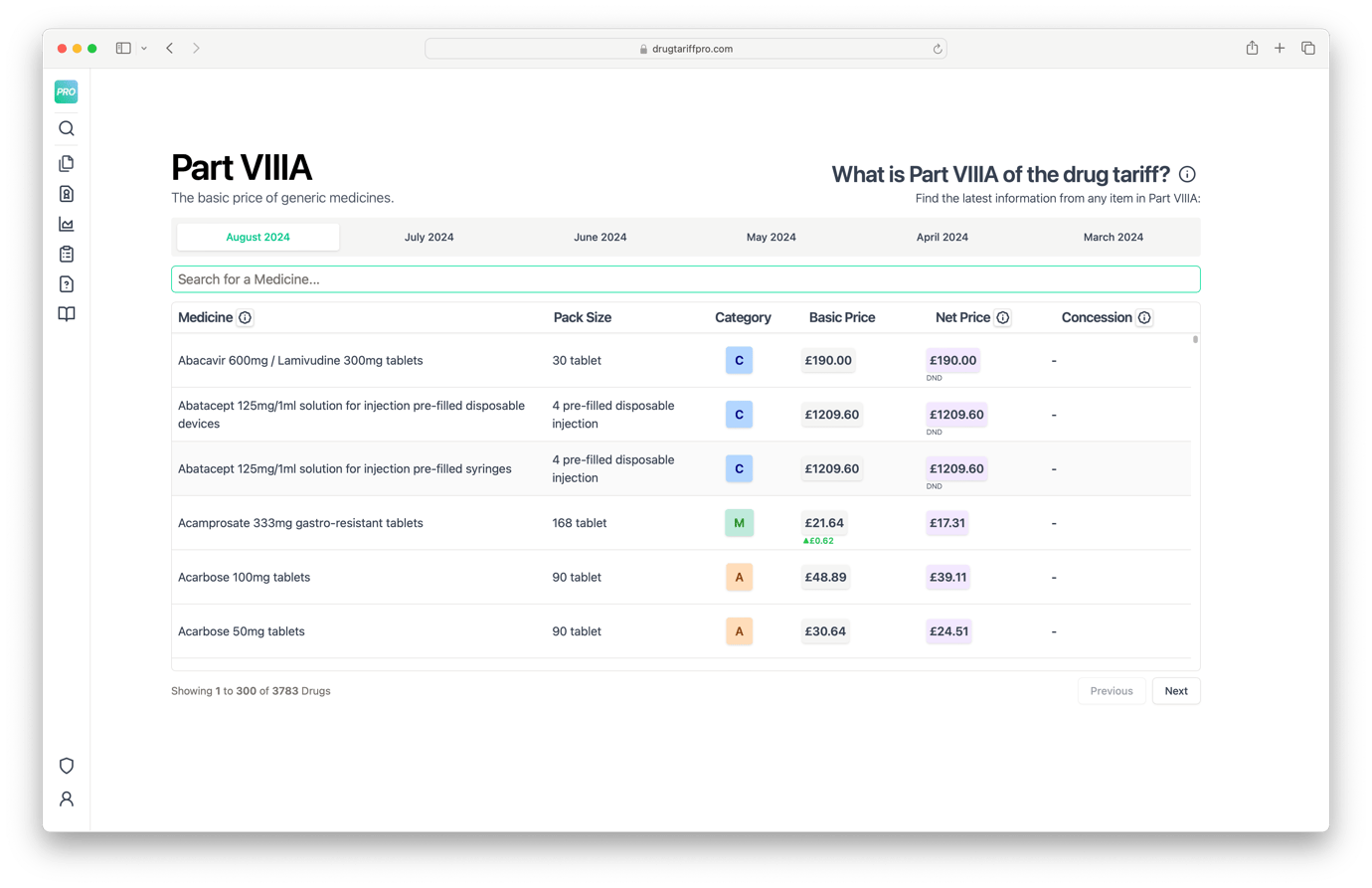
A Discount Deduction (also known as a ‘Clawback’) is a situation in which the DHSC applies a deduction on items listed in the Drug Tariff, reducing the amount that pharmacies are reimbursed. This means that pharmacies are not paid the Drug Tariff price - they are paid the price less the Discount Deduction. Here’s an example: If a drug listed at £10 in the Drug Tariff is subject to a 20% deduction, you'll only be reimbursed £8, making it crucial to source your medicines wisely. Without this careful management, you risk dispensing at a loss, especially when dealing with high-volume or costly medications. The deductions work as follows:- Branded Medicines (Part VIIIA Category C): 5% discount
- Generic Medicines (Part VIIIA Categories A and M): 20% discount
- Appliances (Part IX): 9.85% discount
 But what happens when even the Drug Tariff prices don’t align with market realities? That's where Price Concessions become crucial.
Price Concessions
Price Concessions are granted when medicines cannot be procured at the price listed in the Drug Tariff. The CPE makes applications for these concessions, and they are granted by the DHSC. When a medicine is challenging to obtain for an extended period, contractors face difficulties deciding whether to purchase a drug over the Drug Tariff price for a new month. Price concessions only apply to medicines purchased in the month for which they are granted, and the concessions are typically released towards the end of the month. Using historical data can be an effective way to assess pricing levels and the risks associated with purchasing medicines above the Drug Tariff price. Drug Tariff Pro offers graphical representations of price trends over time, enabling informed purchasing decisions. These graphs provide insights into previous concession pricing trends, offering valuable guidance when procuring these hard to source medicines. Drug Tariff Pro’s ‘Trends’ feature clearly illustrates the significant gap between the basic and concession prices, highlighting the upward trend in concession prices over recent months.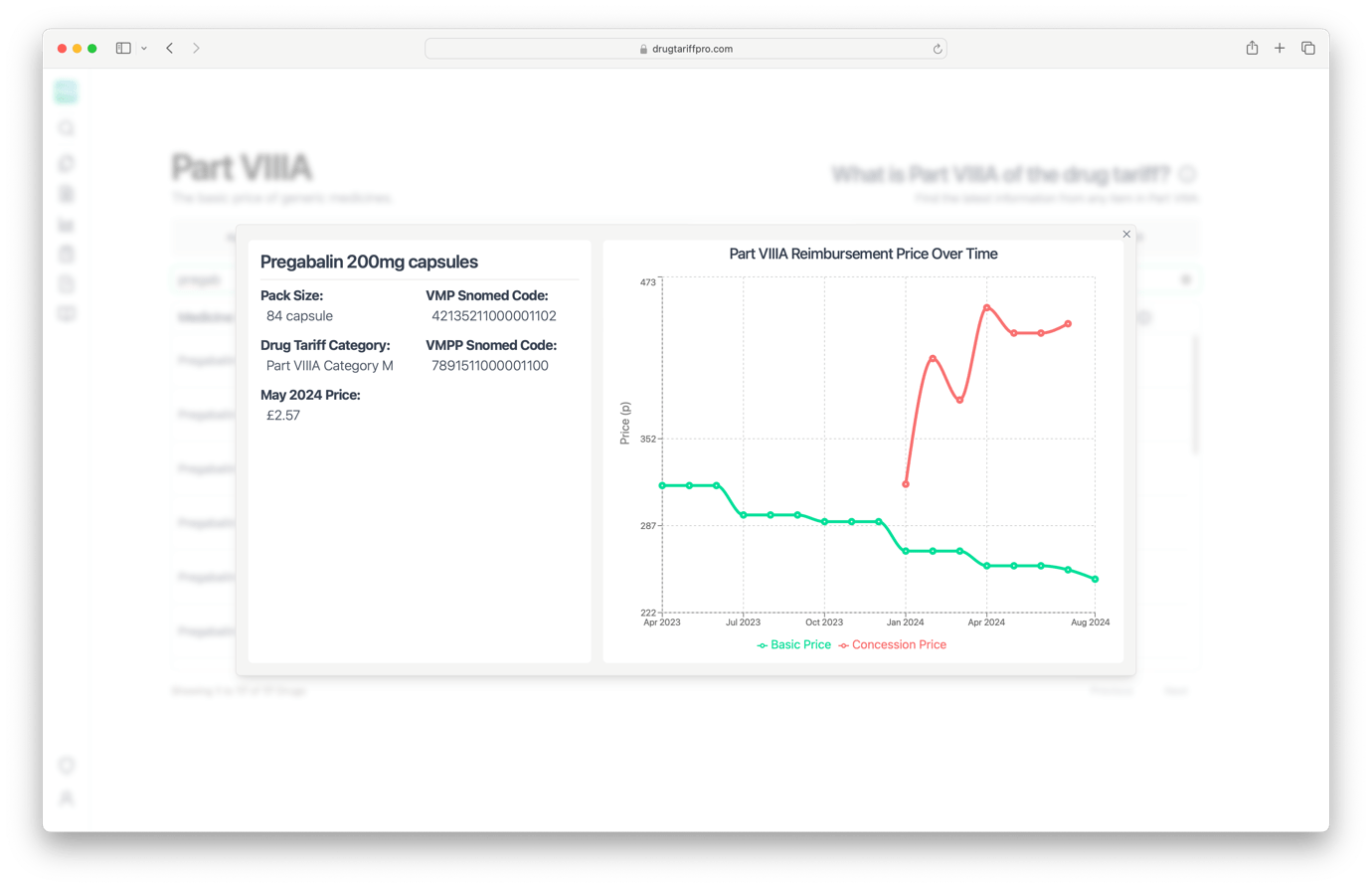 This feature offers support to pharmacies in making sound purchasing decisions, even when a concession price has not yet been granted.
Alongside understanding how to handle concession prices, it's also crucial to manage high volume lines effectively, as they often represent the bulk of your purchasing.
This feature offers support to pharmacies in making sound purchasing decisions, even when a concession price has not yet been granted.
Alongside understanding how to handle concession prices, it's also crucial to manage high volume lines effectively, as they often represent the bulk of your purchasing.
Maximise Profit on Expensive Lines
For high value lines, sourcing from the most cost-effective supplier is vital to maximise purchase profit. Drug Tariff Pro enables you to check prices instantly, showing you the net price so you can ensure your purchase price is below this threshold. This prevents losses even if the wholesale price appears to be below the Drug Tariff, but is not below the net price.To Conclude
Navigating the complexities of the NHS Drug Tariff is a critical skill for any pharmacy owner striving to maintain profitability in today’s challenging market. By utilising the features of Drug Tariff Pro, you can ensure that your pharmacy stays ahead of the curve, managing high volume lines efficiently and sourcing expensive products wisely. Now is the time to become a Drug Tariff Pro. Equip your pharmacy with the tools and knowledge to navigate these challenges successfully, ensuring that you maximise your profits and minimise losses, no matter what the market throws your way.Keen on doing a guest post on our award-winning blog? Get in touch with us!