Understanding Google Trends
Google Trends tracks the popularity of search terms over time, giving insight into what’s gaining attention nationally and worldwide. It doesn’t show exact search volumes but gives relative interest levels on a scale from 0 to 100. This means you can compare interest in different treatments, symptoms, or conditions, identify when public interest is rising, and even anticipate when demand might peak—allowing you to act quickly and effectively.Spotting Seasonal Health Trends
Certain health conditions see a spike in public interest at predictable times of the year. Here’s how pharmacists can use Google Trends to monitor and prepare for these seasonal changes:1. Flu and Cold Season
Searches for terms like “flu symptoms,” “cold remedies,” or “flu jab near me” tend to spike between October and February in the UK. For example, you can see the search for “flu vaccine” over the past 12 months in the graph below.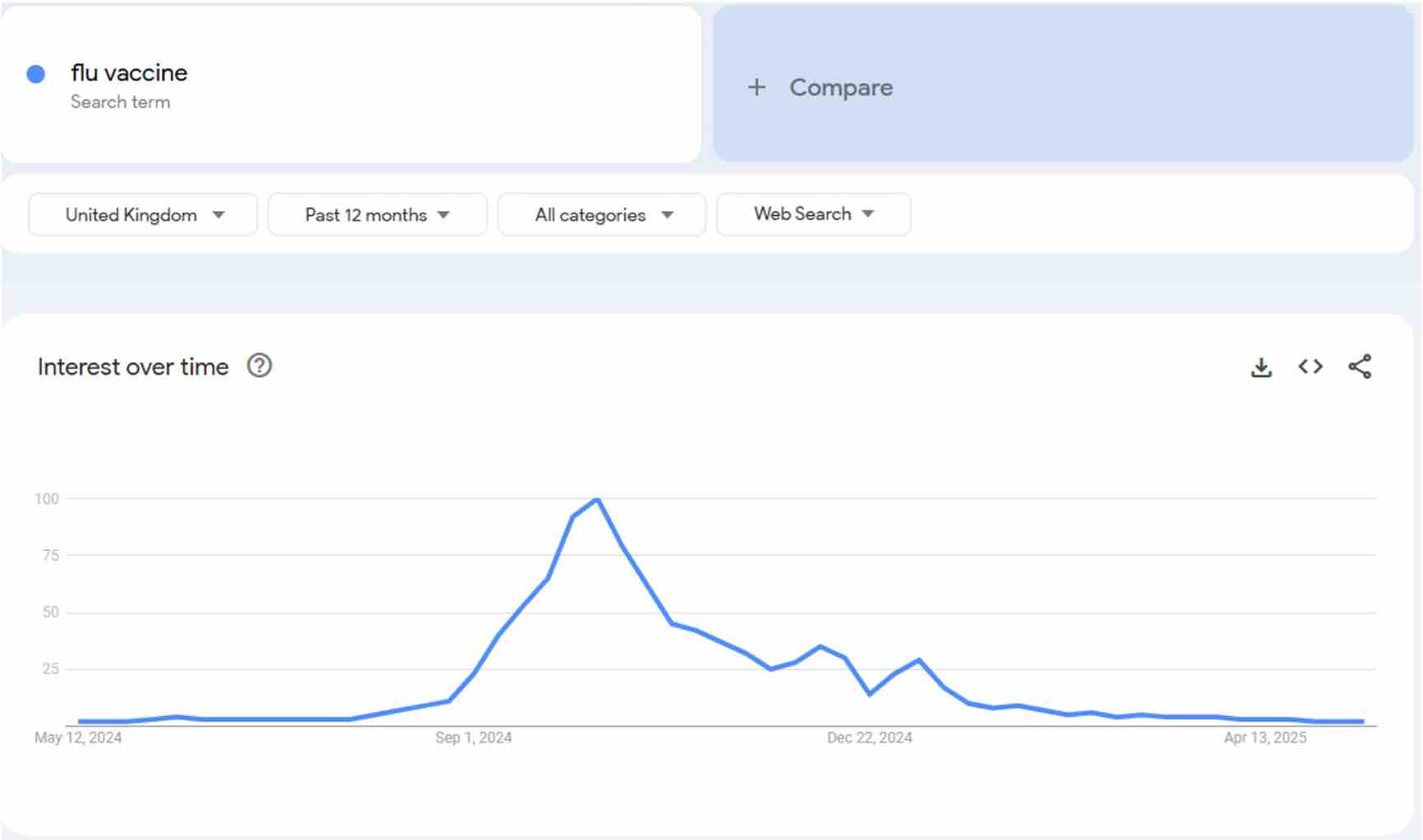 By monitoring this increase early on, you can:
- Stock appropriately: Ensure shelves are filled with cold and flu remedies, hand sanitisers, tissues, and supplements like Vitamin C and Zinc.
- Promote flu jabs early: Launch marketing campaigns in September to encourage early bookings for flu vaccinations.
- Create educational content: Blog posts or social media tips on prevention, recognising symptoms, and treatment can position your pharmacy as a trusted source of healthcare advice.
2. Hay Fever and Allergy Season
Terms like “hay fever tablets” or “pollen allergy” rise sharply from March through July. You can see the search for the term “hay fever” in the graph below.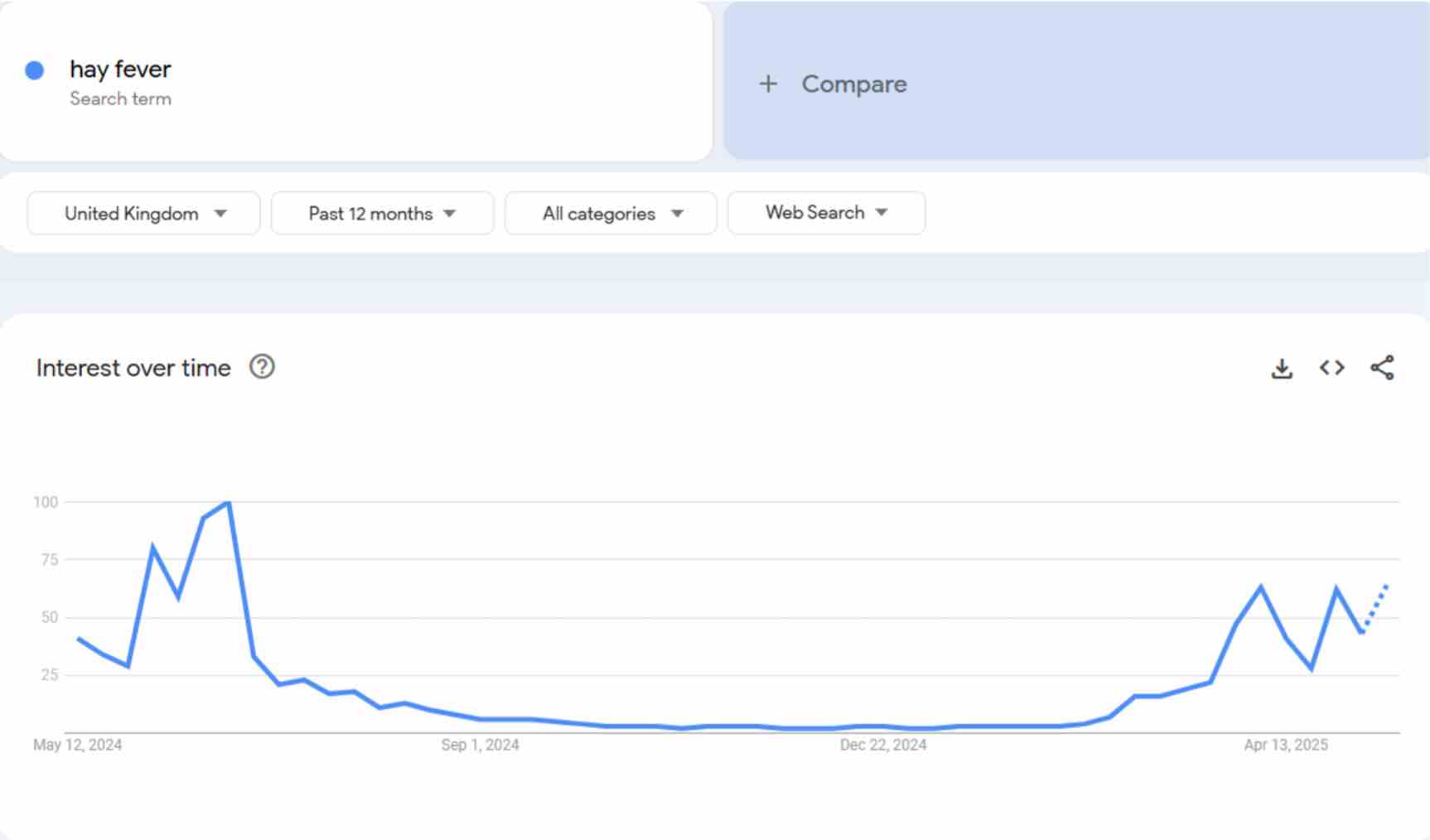 Use this data to:
- Offer promotions: Consider discounts on antihistamines and nasal sprays during peak season.
- Run awareness campaigns: Share pollen forecasts and allergy management tips on your social channels.
- Encourage consultations: Use marketing to promote in-store consultations for personalised allergy relief.
3. Travel Health and Vaccinations
Searches for “travel vaccines” or “malaria tablets” often increase in January as well as around spring and early summer as holiday season approaches. You can see the trends for “travel vaccine” searches in the below graph.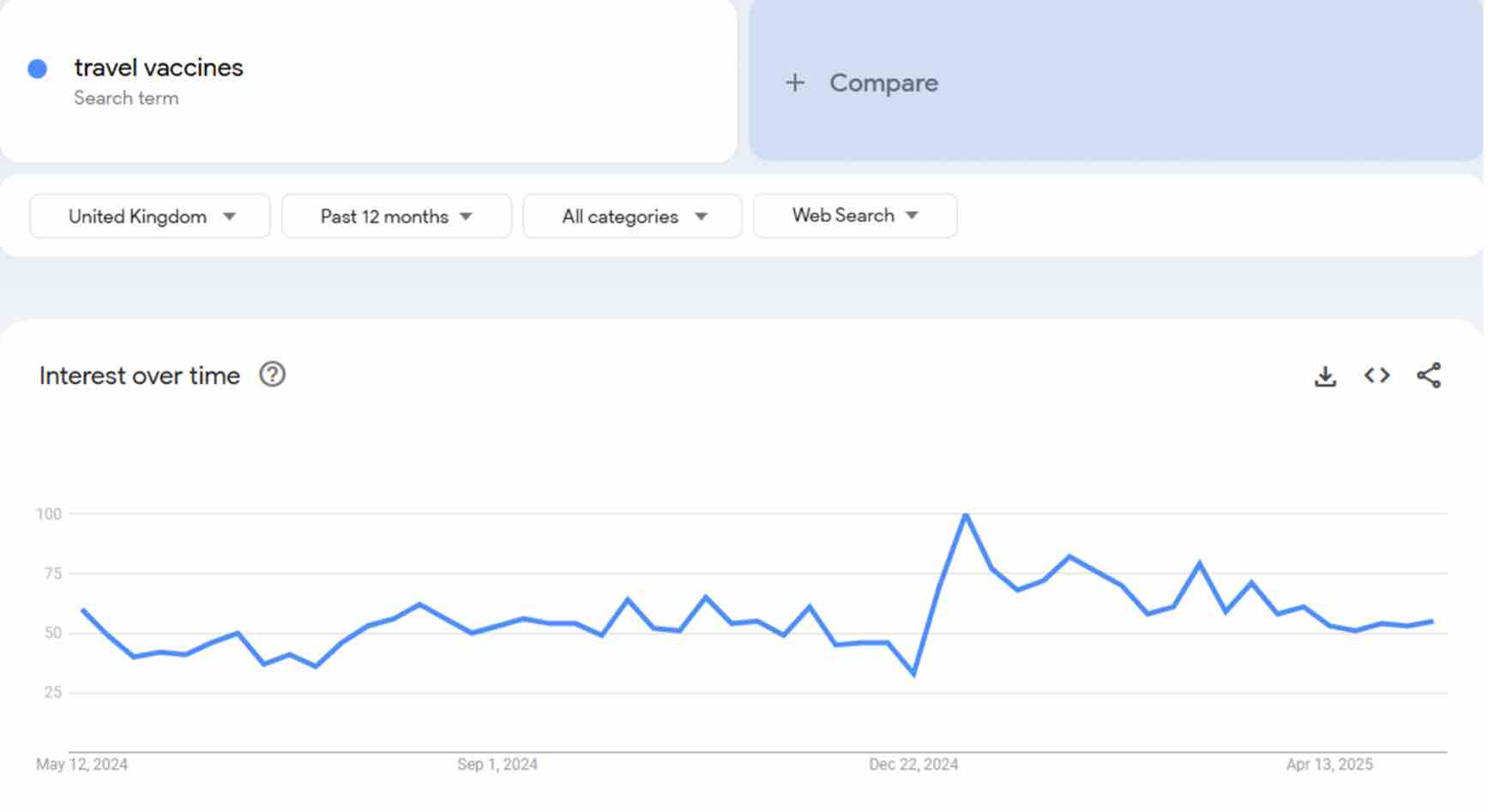 This is an ideal time to:
- Advertise travel clinics: Use Google Trends data to time your ads and social posts promoting travel vaccination services.
- Educate your audience: Provide guides on vaccines needed for different destinations.
Identifying Emerging Trends
Besides seasonality, Google Trends can highlight sudden increases in interest due to media coverage, outbreaks, or new health scares. For example, during the early months of COVID-19, searches for “loss of smell” or “COVID symptoms” exploded. More recently, searches for “RSV symptoms” saw sharp increases. By setting alerts for relevant terms, pharmacists can:- Respond rapidly: Quickly adapt marketing and stock based on rising interest.
- Develop timely content: Publish quick-turnaround blog posts or FAQs answering common questions.
- Provide reassurance: Position your pharmacy as a reliable source of truth during times of public uncertainty.
Actions Pharmacists Can Take
Here’s how you can make the most of Google Trends in your pharmacy’s marketing:- Use it for content planning: Align blog topics, social media posts, and email newsletters with what people are already searching for.
- Plan seasonal marketing campaigns: Create a calendar based on historical peaks for common health conditions.
- Monitor real-time shifts: Stay alert for emerging trends and react quickly with updates to your website or advertising.
How to Get Started
Visit trends.google.com and type in keywords relevant to your pharmacy, such as:- “Flu vaccine”
- “Cold remedies"
- “Travel vaccines”
- “Hay fever”
- “UTI treatment”