Wegovy and Mounjaro: Setting the Stage
The story starts with semaglutide (Wegovy) and tirzepatide (Mounjaro). These GLP-1-based medications became household names almost overnight thanks to their powerful results and high-profile endorsements. In clinical trials, Wegovy helped patients lose up to 15% of their body weight. Mounjaro, which targets both GLP-1 and GIP receptors, demonstrated even more promising results. Wegovy was first approved in the US in 2021 and reached the UK market in early 2023. Although available on the NHS under certain conditions, it quickly became a cornerstone of private weight loss programmes. Mounjaro was approved by the FDA in 2022, and by mid-2023 it was already widely used off-label for weight loss in the US. It wasn’t until December 2024 that tirzepatide was authorised for weight management in the UK. However, interest in the drug had already started rising well before its UK availability, as the graph below shows.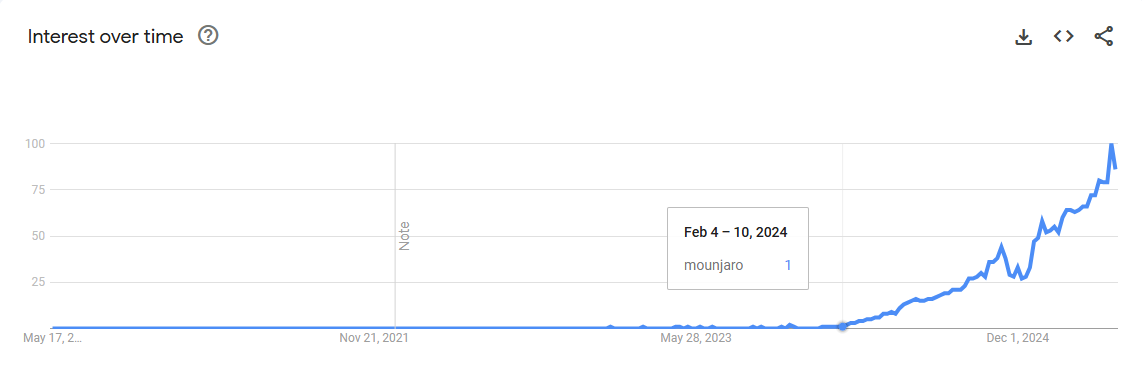 In early 2024, UK searches for Mounjaro spiked significantly—nearly a full year before its approval. The same pattern occurred with Wegovy, where public interest surged in line with rising global awareness and NHS adoption in early 2023.
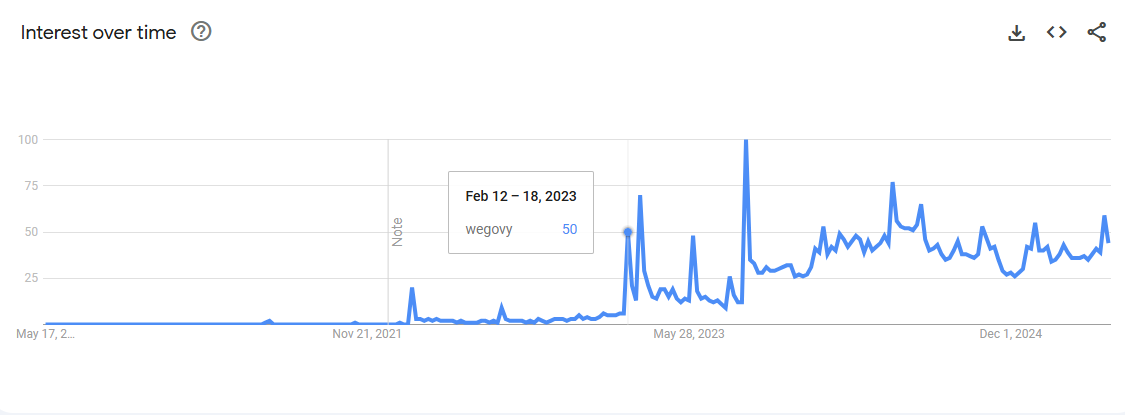
Wegovy was released even earlier than Mounjaro, receiving approval in the US in 2021. It became widely available in the UK in 2023. As shown in the UK search trend graph below, public interest didn’t begin to rise significantly until early 2023.
In early 2024, UK searches for Mounjaro spiked significantly—nearly a full year before its approval. The same pattern occurred with Wegovy, where public interest surged in line with rising global awareness and NHS adoption in early 2023.
Wegovy was released even earlier than Mounjaro, receiving approval in the US in 2021. It became widely available in the UK in 2023. As shown in the UK search trend graph below, public interest didn’t begin to rise significantly until early 2023.
Be Part of the Weight Loss Revolution
Trends in weight loss medication uptake indicate that public awareness and interest in new weight loss drugs often trail behind their initial approvals - particularly when rollout is limited or information is slow to reach consumers. In Wegovy’s case, despite global media coverage and impressive clinical results, it wasn’t until accessibility improved and real-world success stories gained traction that interest among UK consumers truly accelerated. This delay between approval and public uptake highlights a critical window of opportunity for healthcare providers, private clinics, and pharmacies: a chance to educate, inform, and prepare their patients ahead of wide-scale availability. If interest in Wegovy and Mounjaro ramped up well before full distribution, the same can be expected - if not amplified - for emerging weight loss drugs currently in development. With drugs like Retatrutide, Amycretin, and Orforglipron already generating early buzz due to promising trial results, it's likely that public curiosity and online searches will begin increasing months (or even a year) ahead of their official release. Pharmacies that recognise this trend can prepare in advance - building awareness campaigns, search-optimised content, and patient-facing materials that position them as early, informed providers. In short, the market has shown that consumer demand is highly responsive to innovation in the weight loss space. The earlier pharmacies and private clinics prepare, the more likely they are to capture interest, offer meaningful guidance, and lead the conversation around the next generation of weight loss treatments.New Weight Loss Drugs: The Next Generation
What does this tell us? Patients are well-informed, proactive, and willing to seek out new weight loss drugs even before they reach their local pharmacy. And with an impressive pipeline of new medications on the horizon, we expect another wave of demand to hit—this time, even more intensely. Here’s a breakdown of the key emerging weight loss drugs that could redefine the market:Retatrutide
Dubbed the “triple G” drug, Retatrutide targets GLP-1, GIP, and glucagon receptors. Early trials show unprecedented weight loss - up to 24% in some studies. It's currently in late-stage trials and could receive FDA approval in 2025, with European and UK authorisation likely to follow soon after. If this drug meets expectations, it will dwarf the effects of Wegovy and Mounjaro.Amycretin
A dual GLP-1 and amylin receptor agonist, Amycretin works synergistically to control appetite and slow gastric emptying. It’s another injectable with promising early-phase results, showing faster weight loss onset and improved tolerability. It could be ideal for patients who struggle with existing GLP-1 therapies.CagriSema
This injectable combo of cagrilintide and semaglutide merges amylin analogues with GLP-1s to provide robust satiety effects. Trials are reporting excellent efficacy with tolerability similar to semaglutide alone. If approved, CagriSema will likely be marketed as a more effective alternative to Wegovy, requiring fewer dose escalations and delivering quicker results.Orforglipron
One of the most exciting developments is Orforglipron, an oral GLP-1 receptor agonist. Unlike injectable treatments, this daily pill offers convenience for patients wary of needles. Trials suggest comparable weight loss to Wegovy with fewer gastrointestinal side effects. As one of the first true oral alternatives, it may change the accessibility and uptake of weight loss medications entirely.MariTide
Designed as a monthly injectable, MariTide provides a long-acting option that reduces the burden of weekly injections. For patients who value convenience and minimal disruption, MariTide could be an appealing alternative. Clinical studies show solid efficacy with a well-tolerated profile, making it one to watch closely.GSBR-1290
Still in development, GSBR-1290 is another oral GLP-1 antagonist aiming to compete with Orforglipron. Its unique compound design may offer a differentiated safety profile and more consistent absorption. If successful, it could create an entire submarket of oral GLP-1s—an option that would be highly attractive in the private pharmacy setting.Other Options
Survodutide: A glucagon/GLP-1 dual agonist with promising effects on body fat metabolism. Pemvidutide: Shows dual benefit for weight loss and fatty liver treatment. ARD-101: A gut-targeted GPR119 agonist in development for oral delivery, aiming to reduce side effects often associated with systemic GLP-1 drugs.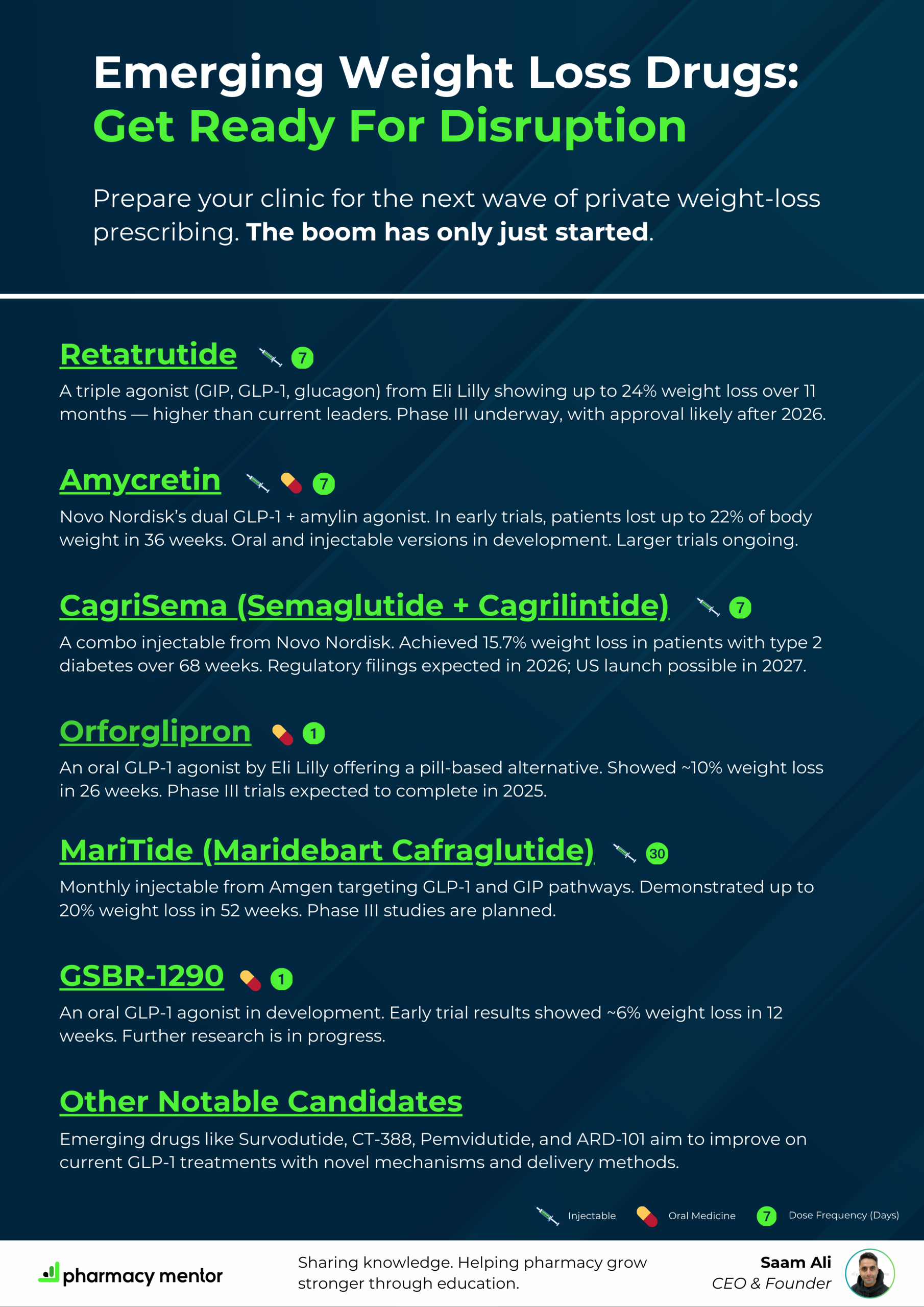
What This Means for Private Pharmacies
So what does this explosion of new weight loss drugs mean for the industry - and for your pharmacy? With patient interest rapidly increasing, private clinics and pharmacies are well positioned to deliver these treatments quickly, accessibly, and safely, often well before they become available through the NHS. By offering early access to innovative treatments, pharmacies can:- Establish themselves as leading providers of weight management solutions
- Meet patient demand ahead of NHS rollout
- Build trust through clinical support and pharmacist-led consultations
- Enhance long-term customer relationships with ongoing monitoring and aftercare
Preparing for the Future
To capitalise on this new wave, pharmacies must be ready to adapt. That means:- Staying up to date with clinical trial results and MHRA approvals
- Training staff to counsel on the benefits and side effects of novel GLP-1s
- Offering flexible models for consultations, dispensing, and follow-up
- Marketing new services effectively - before patients start searching elsewhere