
A traveller searching on their phone may have a destination, a departure date and very little idea which appointment they need. A travel-clinic website has to turn that uncertainty into an appropriate booking without pretending to replace an individual risk assessment.
That makes travel clinic website development a service-design task. Destination content, local visibility, pre-consultation information, appointment capacity and follow-up all need to work together.
What should a travel clinic website do?
A travel clinic website should help people research destination risks, understand the clinic's role, provide the details needed for a professional risk assessment and book at a suitable location and time. It should keep clinical recommendations with the qualified professional while making the administrative journey clear.
- Organise discovery around destinations, locations and appointment need—not a catalogue of vaccines alone.
- Capture itinerary, timing and relevant history through a secure, accessible route.
- Connect booking demand with stock, trained staff, consultation capacity and certificate processes.
Design for destination-led searches
Many journeys begin with a country or city rather than the name of a vaccine. Build a structured destination hub that explains what information a traveller should check and directs them to current official advice. Do not copy a static recommendation table that can become outdated and look like personalised clinical guidance.
The NHS travel-vaccination guidance directs people to TravelHealthPro for country recommendations and advises seeking professional advice in advance because some courses take time. A clinic page can help a traveller prepare, but the appointment should remain the point where destination, medical history, planned activities and previous vaccination are assessed together.
Create a clear relationship between destination guidance and local service pages. Someone who lands on a country page should be able to see which branch provides travel consultations, how soon they can book, what to bring and what the clinic can and cannot confirm before assessment.
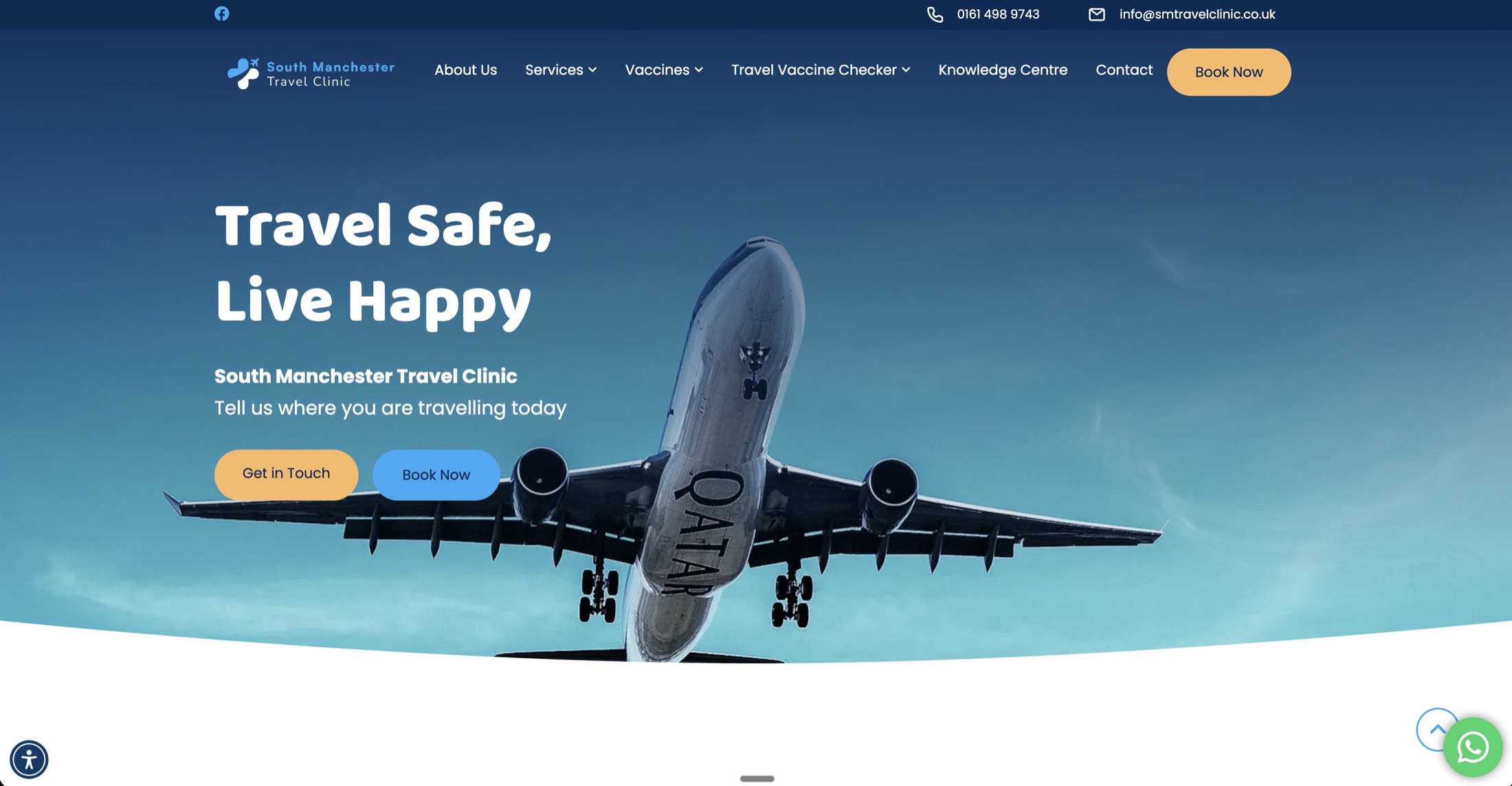
Make the appointment type and location unmistakable
Travel clinics often have several branches, services and appointment lengths. Preserve the selected location and consultation type when the patient enters the calendar. If a branch does not provide a service or has no suitable availability, explain the alternative rather than showing an empty timetable.
Show the pricing basis clearly. A consultation fee, vaccine price and course cost may be different things. If stock availability can change, say when it will be confirmed. Avoid a journey in which the traveller discovers an essential charge only after entering detailed health information.
The site should also support people travelling soon. Official guidance notes that a last-minute appointment can still be worthwhile. Provide a route to ask about urgent availability without claiming that the clinic can complete every course or meet every entry requirement before departure.
Use pre-consultation forms to prepare, not prescribe
TravelHealthPro's risk-assessment guidance describes information such as destination, itinerary, medical history, medicines, activities and previous vaccines as inputs to a professional assessment. A digital form can collect those details in advance and reduce repetitive administration.
Make long itineraries manageable. Let people add countries and dates, explain why information is requested and allow an authorised practitioner to review it in a usable format. Do not send detailed clinical answers in an unencrypted email or expose them to general marketing systems.
Ask the service team which information is necessary before booking and which is better collected during the consultation. A shorter booking form followed by a secure assessment may perform better than forcing every traveller through a clinical-length questionnaire before they can see availability.
Treat yellow fever as a controlled service
Do not imply that every travel clinic is a Yellow Fever Vaccination Centre. The MHRA says yellow fever vaccine must be administered in a registered centre by appropriately registered and trained healthcare professionals. If a branch is designated, keep its status, trained team, certificate process and relevant booking information current.
The website should distinguish a general travel consultation from a yellow-fever appointment and avoid promising vaccination before the individual assessment. If the service cannot provide it, link people to the official centre search rather than creating an ambiguous lead.
Connect marketing with appointment capacity
Local SEO and suitable advertising can create demand quickly, particularly around seasonal travel. That only helps when the clinic has trained staff, appointment slots, stock and a reliable booking process. Feed branch availability into campaign decisions instead of sending every visitor to the same generic page.
Measure destination-page visits, booking starts, confirmed appointments, attendance, lead time before travel, branch capacity and rescheduling. A campaign may generate many clicks while producing the wrong locations or departure dates. Optimise for a service the pharmacy can actually deliver.
Structure local pages without creating doorway content
A multi-branch clinic needs a useful page for each real location. Include the address, access information, opening pattern, services actually available, contact route and booking context. Add distinctive details that help a traveller choose the branch; do not duplicate one page and change only the town name.
Keep a single authoritative record for each branch and feed it into the website, booking system and structured data where possible. Conflicting names, telephone numbers or opening times weaken trust and create avoidable support calls. If a service is temporarily unavailable, update both the page and the calendar rather than relying on staff to explain after booking.
Destination content and local pages should have different jobs. A destination guide answers research questions and leads towards professional advice. A location page proves that a real clinic can provide an appropriate route nearby. Linking them helps both users and search engines understand the service without producing hundreds of thin destination-and-town combinations.
Maintain clinical and operational content deliberately
Give every destination template, preparation instruction, price and service statement an owner and review trigger. Official recommendations and entry requirements can change; link to the current source and avoid hard-coding claims the team cannot maintain. Record the date of clinical review where that context helps users.
Operational content needs the same discipline. Test confirmation emails, reminders, preparation instructions and cancellation links whenever the booking integration changes. A well-designed landing page cannot compensate for a confirmation that names the wrong branch or omits what the traveller must bring.
Build retention around useful service, not noise
Confirmation messages should state the location, time, preparation and what to bring. Reminders can reduce avoidable non-attendance. After the appointment, the clinic may need to provide certificate, course or follow-up information through an appropriate route.
Keep service communications distinct from marketing consent. A person needs their appointment reminder whether or not they want future promotions. If you ask permission for travel updates or other pharmacy services, make the choice clear and record it accurately.
A practical development sequence
- Map destinations, branches, services, appointment types and responsible team members.
- Prototype destination-to-booking and last-minute mobile journeys.
- Connect secure pre-consultation information to the practitioner workflow.
- Test stock, capacity, cancellation, rescheduling and certificate exceptions.
- Launch with controlled local demand and reconcile bookings against attendance.
- Expand content and campaigns only when the clinic can fulfil the additional work.
Pharmacy Mentor combines pharmacy website development, pharmacy SEO and paid advertising around service capacity and patient journeys. For a travel-clinic build or booking review, book a consultation with the team.
Frequently asked questions
Should a travel clinic website list vaccines by country?
It can help people find current official country information, but recommendations depend on the individual traveller, itinerary and health history. Keep dynamic clinical advice with authoritative sources and the professional risk assessment rather than presenting a static webpage as personalised advice.
What information should a travel clinic booking form collect?
Collect only what the clinic needs at that stage. Useful inputs may include destinations, dates, planned activities, relevant medical history, medicines and previous vaccinations, but the exact form should be approved by the service's clinical and data-protection leads.
Can any pharmacy advertise yellow fever vaccination?
A website should only present a branch as providing yellow fever vaccination where the service has the required designated-centre status and trained professionals. Keep the page accurate and make clear that supply follows an individual assessment.

Saam Ali
Founder & CEO, Pharmacy Mentor · MRPharmSSaam Ali is a pharmacist, digital strategist and the founder of Pharmacy Mentor. He has worked across community pharmacy, healthcare marketing and digital product development since 2012, helping independent pharmacies build modern online services and reach more patients.