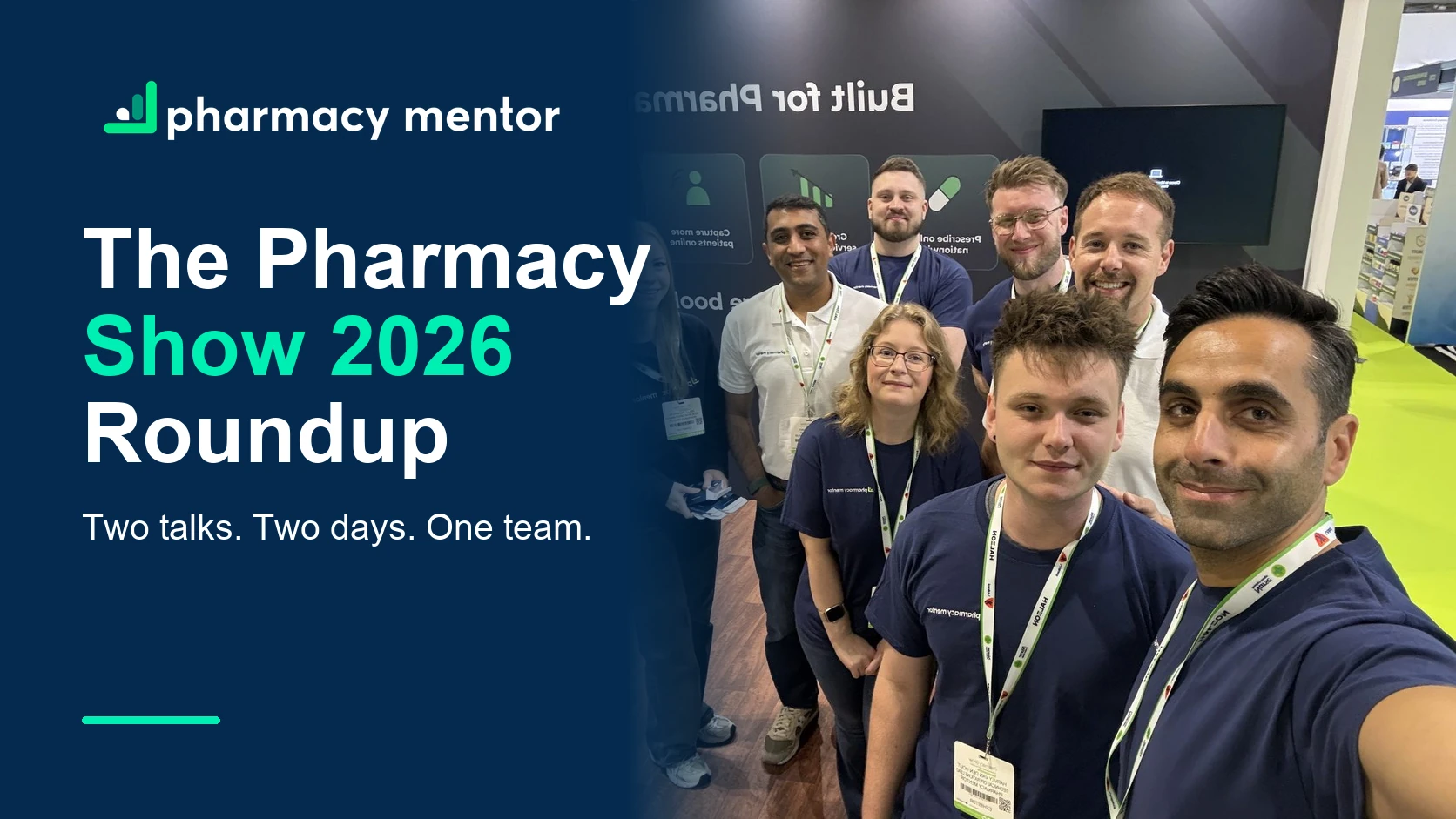
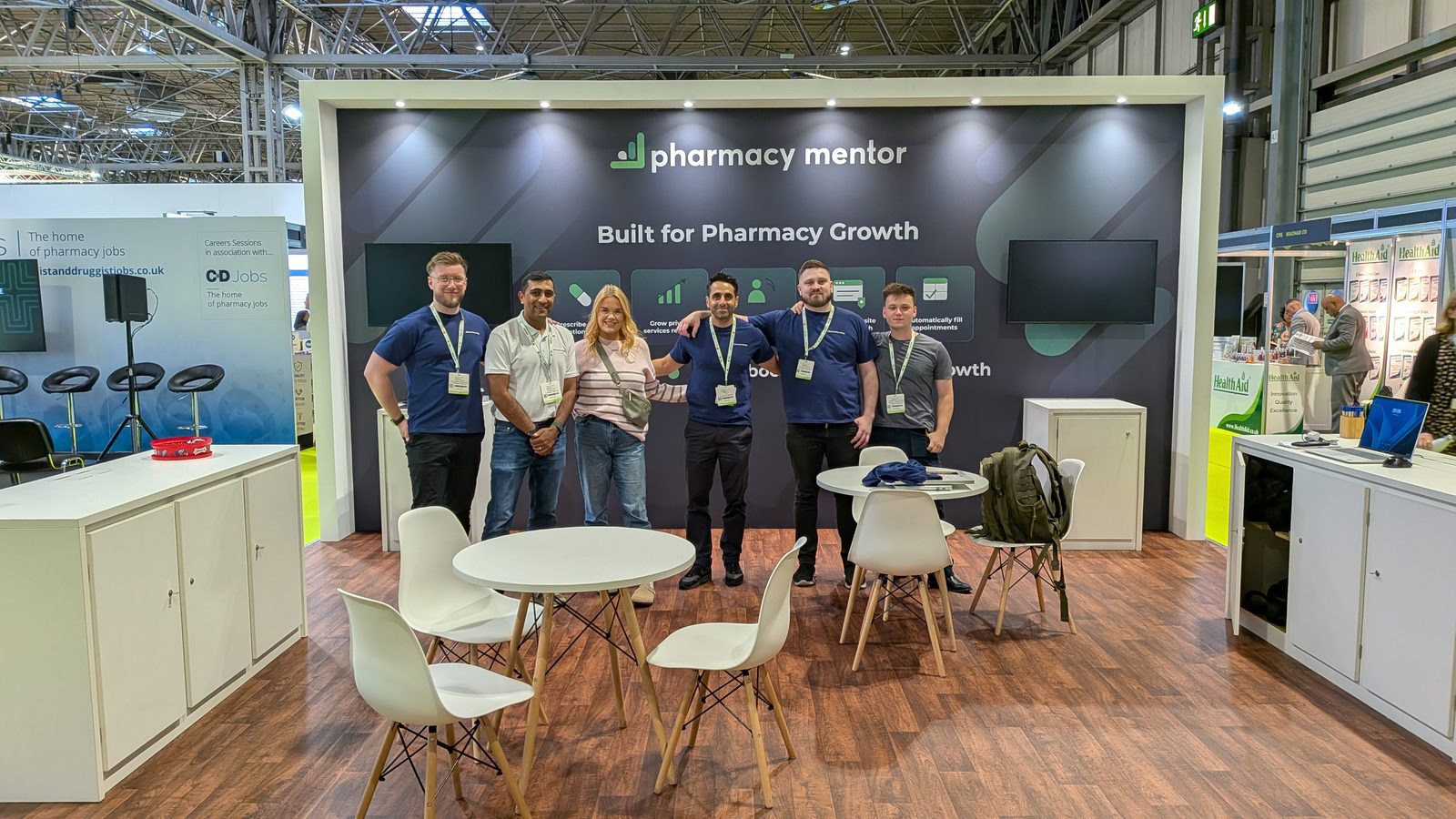
The team selfie says more than a polished stand shot could. After two full days at the NEC, eight of us squeezed into frame in front of the Pharmacy Mentor stand. The screens had gone quiet, but the conversations we had throughout The Pharmacy Show 2026 were still very much alive.
The show took place in Birmingham on 11 and 12 October, bringing community and primary care pharmacy together for education, supplier discovery and face-to-face discussion. Pharmacy Mentor exhibited across both days, and I delivered two sessions: one about building profitable online clinics and another opening up the AI tools that support my working day.
This is our roundup of the people, ideas and owner decisions behind the photographs.
What stood out at The Pharmacy Show 2026?
Pharmacy owners were not short of technology or service ideas. The harder question was how to make an idea work as a complete business system. Online clinics need an operating model, not just a website. AI needs a defined job and a responsible human owner. Growth needs the patient journey, pharmacy team and follow-up process to connect. Those themes shaped our two speaker sessions and the conversations around the Pharmacy Mentor stand.
Two days at the NEC
The scale matters. The organiser's official pre-show guide advertised more than 340 exhibitors, 130 education sessions and 160 speakers. Those figures describe the opportunity, but they also explain the challenge: no owner can see everything, speak to everyone or act on every idea.
We approached the show with a clear role. The Pharmacy Mentor stand was built around digital growth for pharmacy: online prescribing, private-service revenue, patient acquisition, stronger websites and appointment generation. That gave visitors a practical starting point. Instead of beginning with a product name, we could begin with the result a pharmacy wanted and work backwards into the journey, team and technology required.
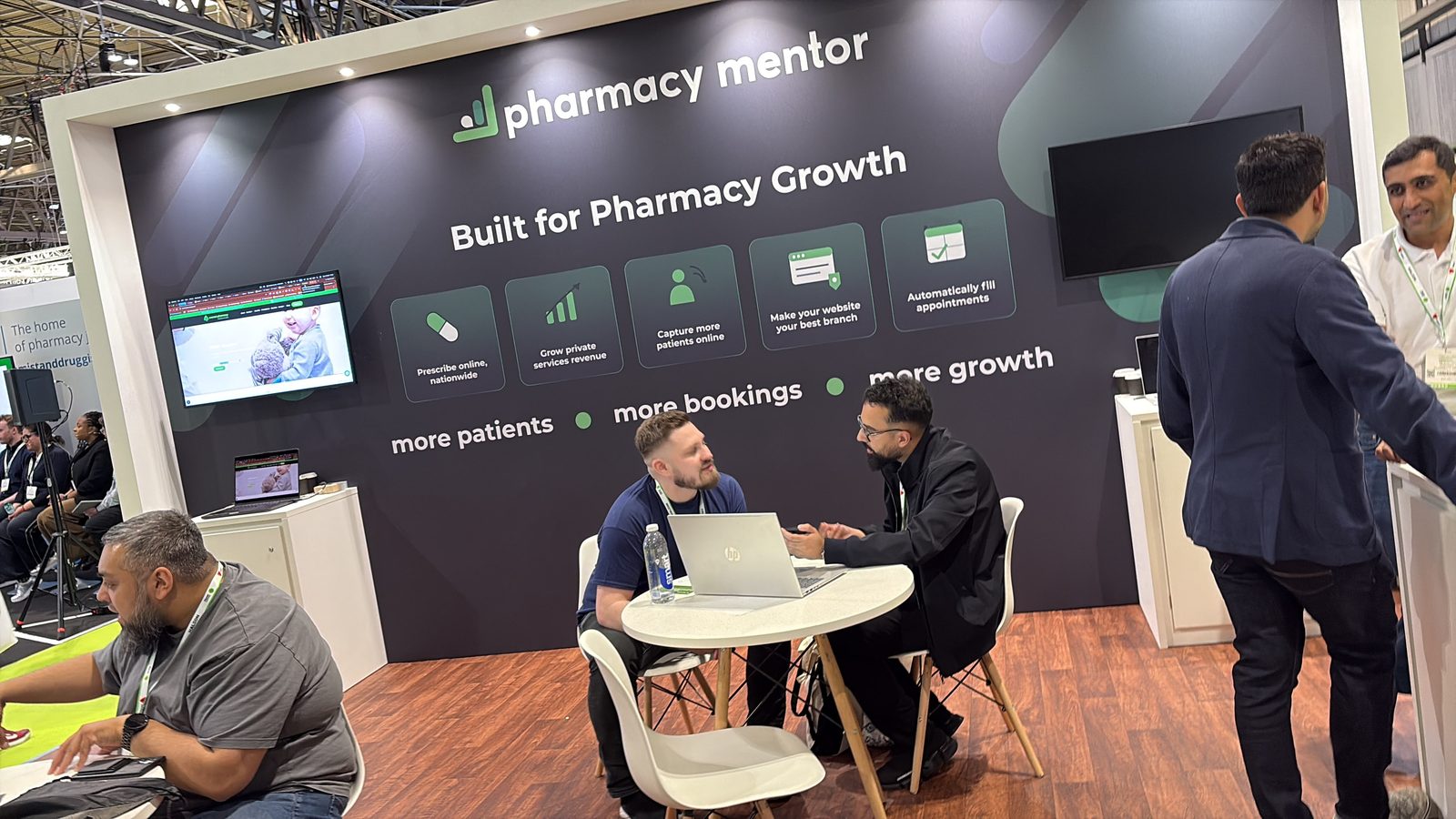
There was also value in simply being together. A digital agency can spend most of its week in browser tabs, project boards and video calls. The show gave our team a shared physical space to demonstrate work, compare notes and meet the people behind pharmacy businesses. It also allowed conversations to continue naturally: a question raised during a talk could be explored later at the stand.
The organiser has now published its own 2026 highlights. Our photographs add Pharmacy Mentor's view from the stand, theatre and exhibition floor.
Online clinics are businesses, not bolt-ons
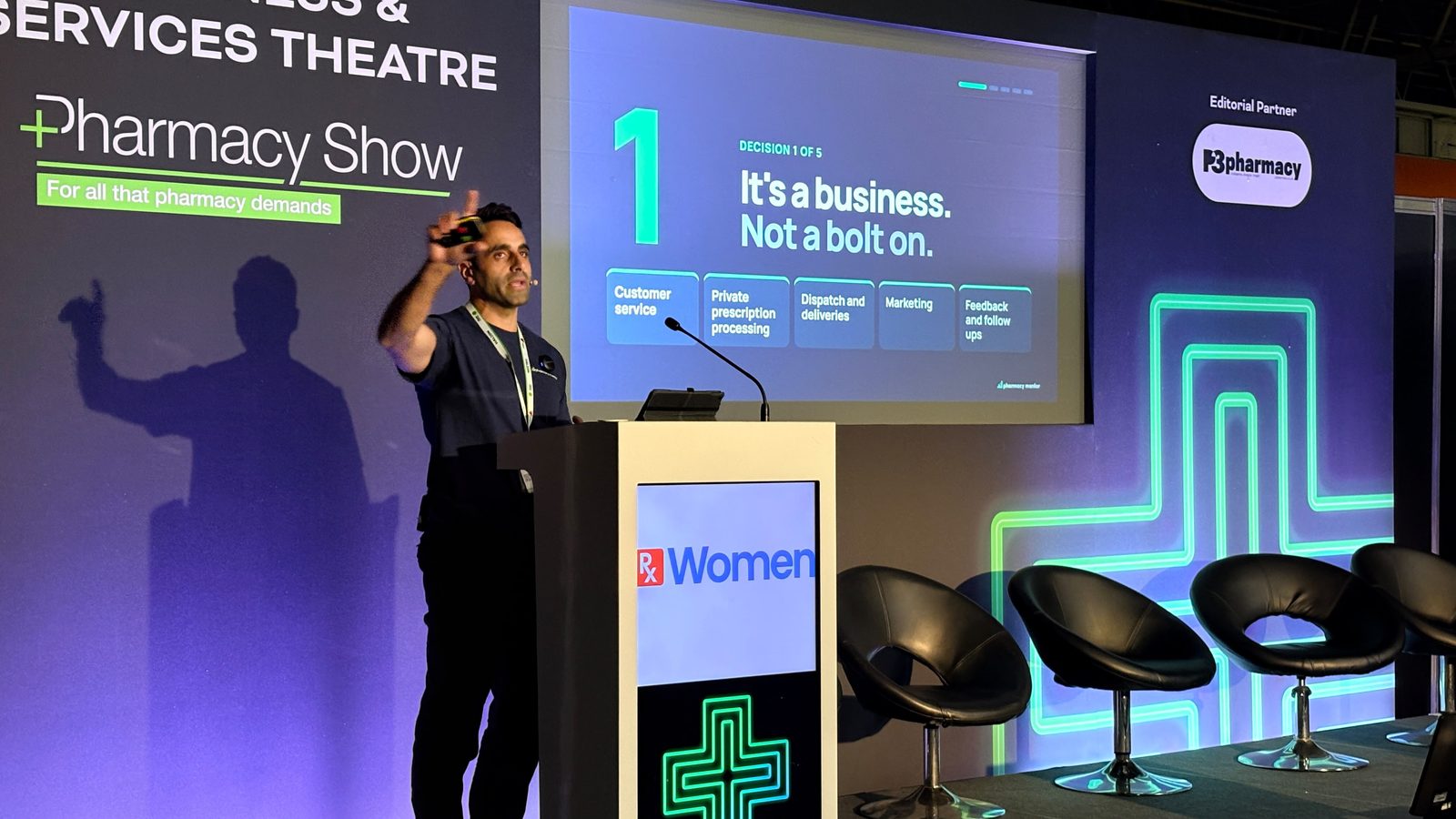
My first session was called “What profitable online clinics do differently”. The point was not that every pharmacy should launch the same service or buy the same platform. It was that an online clinic has to be treated as a business with connected responsibilities.
One slide reduced that operating model to five areas: customer service, private-prescription processing, dispatch and deliveries, marketing, and feedback and follow-up. A website sits across those areas, but it cannot replace them. If one part is weak, the patient and the pharmacy team feel the break.
A pharmacy owner considering an online clinic can therefore begin with five questions:
- Who is the service for? Define the patient need, service scope and reason someone would choose this pharmacy.
- Who owns each stage? Make clinical, operational, customer-service and marketing responsibilities explicit.
- What happens between screens? Map prescribing, dispensing, payment, supply, delivery, queries and follow-up.
- What does good performance look like? Track more than sales. Capacity, abandoned journeys, response time, repeat use and exceptions can all reveal where the model needs attention.
- What must remain under professional control? Technology should support safe, accountable decisions rather than hide them.
Our online clinic website development guide explains how to turn the operating model into requirements. The ecommerce prescribing clinic technology stack then shows how the patient-facing and operational components can fit together.
A practical AI stack, with a person still accountable
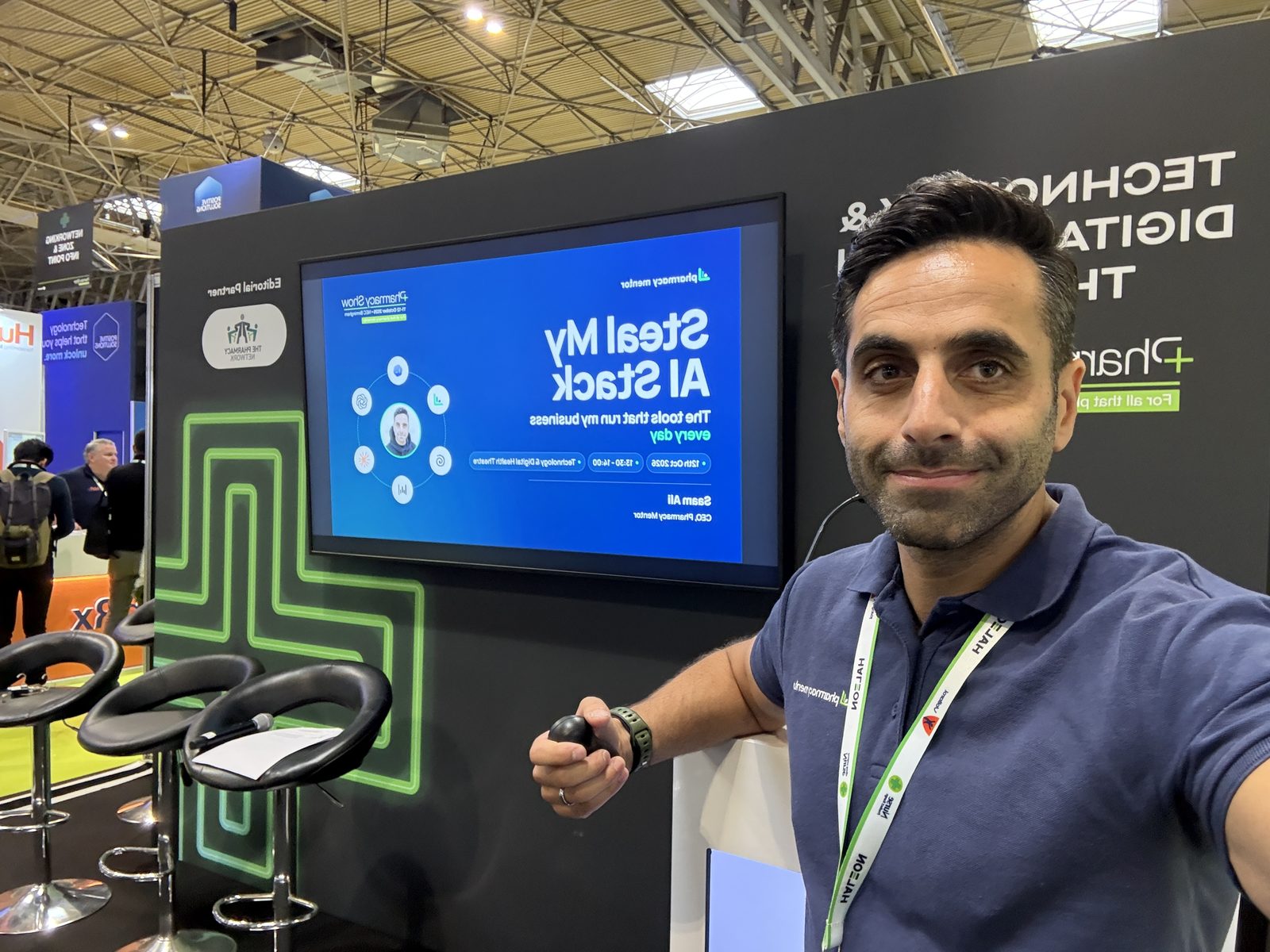
The second session, “Steal my AI stack: the tools that run my business every day”, was deliberately practical. The official conference programme listed it in the Technology & Digital Health Theatre and described a walkthrough of the tools, the job each one performs and how they fit into a working day.
The useful question is not “Which AI tool is best?” in the abstract. It is “Which repeatable job are we trying to improve, what information does it use, and who checks the result?” A general-purpose assistant, a meeting tool and an automation platform may all use AI, but they solve different problems and expose different risks.
For a pharmacy business, a sensible experiment starts narrowly. Choose a low-risk administrative task, define what a satisfactory output looks like, remove information the tool does not need and keep a named person responsible for review. Record the time saved as well as the corrections required. That evidence is more valuable than an impressive demonstration with no owner, boundary or follow-up.
For more detail, our AI tools for pharmacy guide covers practical use cases, while the AI governance framework looks at purpose, information, oversight and monitoring. The principle is simple: AI can prepare and assist; accountable people still decide.
What our stand was built to explain
The stand carried one headline: Built for Pharmacy Growth. Underneath it were five outcomes rather than a menu of technical features. That distinction matters because pharmacy owners rarely begin with a need for “a new CMS” or “an automation workflow”. They begin with a service that is difficult to discover, a booking diary that has gaps, a website that no longer represents the business, or a private-service plan that has not yet become a dependable operation.

Good digital work connects those commercial questions with the pharmacy's real capacity. Search visibility is only useful when the service information is accurate. Advertising is only useful when the landing page and booking route make the next step clear. An online consultation is only useful when the team can operate the pathway and respond to exceptions.
That is why Pharmacy Mentor brings pharmacy website design, pharmacy SEO, paid promotion and connected systems into one plan. The objective is not to add more digital activity. It is to make the parts support a defined business outcome.
Five useful actions after the show
A busy exhibition can leave an owner with a bag of brochures, a phone full of photographs and more possibilities than time. The best next step is not to arrange ten supplier calls. It is to reduce the show to a short decision list.
- Write down the problem before the product. Describe the operational or commercial result you need in one sentence.
- Choose one idea to investigate first. A clear priority protects the team from several half-started projects.
- Map the complete pharmacy journey. Include patients, staff, professional decisions, information, payments, suppliers and follow-up.
- Ask for evidence that matches your setting. A feature list is not enough. Request examples, responsibilities, support arrangements, limitations and total costs.
- Set a decision date. Assign an owner, record open questions and decide when the pharmacy will proceed, pause or stop.
If you attended with colleagues, compare notes separately before combining them. Different people notice different risks and opportunities. That discussion can reveal whether an idea solves a shared problem or only looked convincing on the show floor.
Photographs from The Pharmacy Show 2026
The event was also about people. Thank you to everyone who visited the stand, joined a session, introduced us to a colleague or stopped for a photograph. These images capture a small part of two very full days.
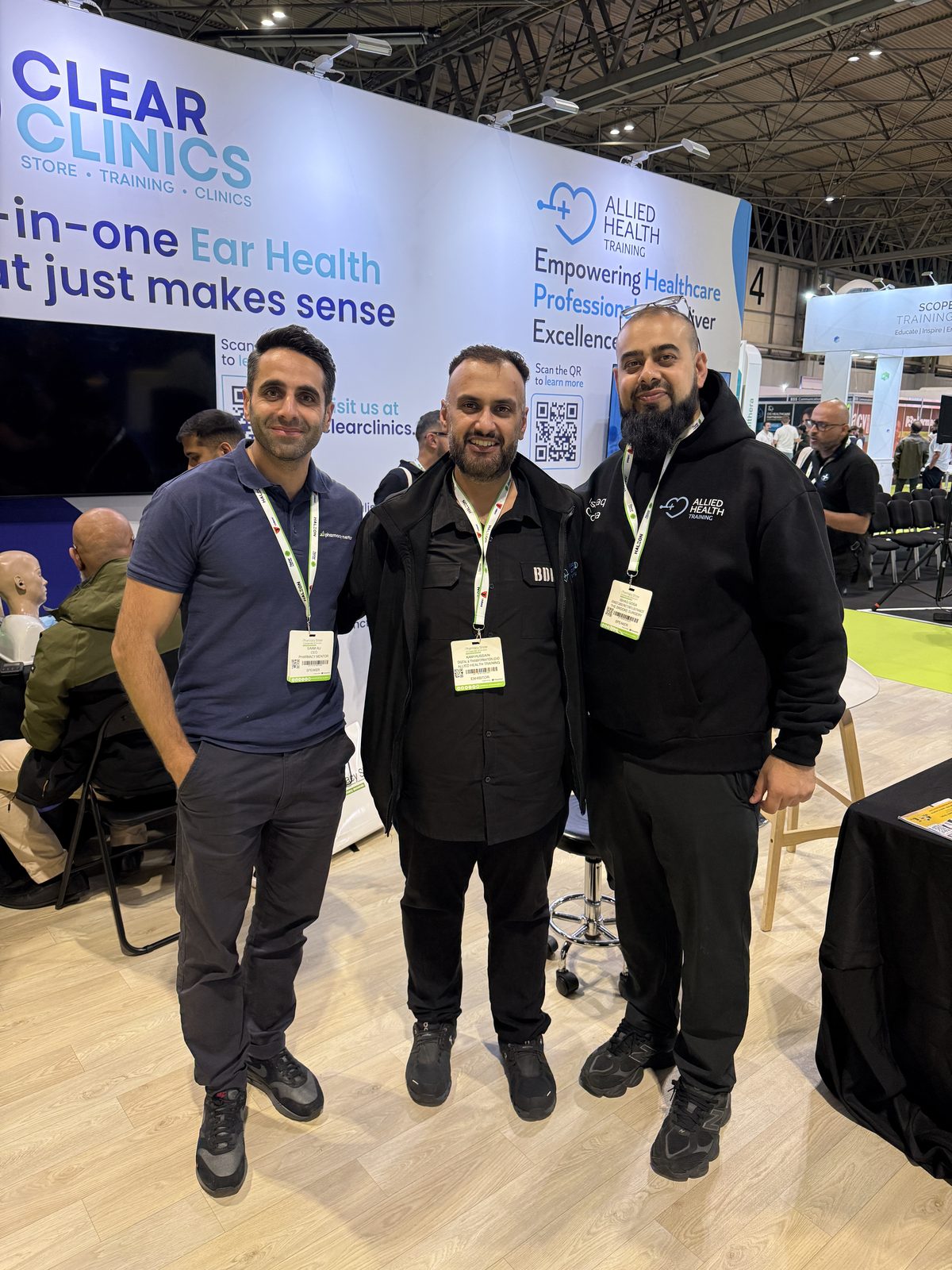
If you were planning your visit before the event, our existing insider guide to what was on at The Pharmacy Show 2026 remains the detailed programme preview. This roundup has a different purpose: recording what Pharmacy Mentor contributed and the practical business themes we brought home.
For the team, the final selfie is the right closing image. It is informal, slightly crowded and unmistakably ours. It records the people who planned the stand, built the demonstrations, spoke with visitors and kept two long days moving.
Turn the idea into a pharmacy growth plan
If The Pharmacy Show prompted a website, online-clinic, marketing or automation project, we can help you define the operating model and build the connected journey around it.

Saam Ali
Founder & CEO, Pharmacy Mentor · MRPharmSSaam Ali is a pharmacist, digital strategist and the founder of Pharmacy Mentor. He has worked across community pharmacy, healthcare marketing and digital product development since 2012, helping independent pharmacies build modern online services and reach more patients.